What We Do

Services

Every concrete service, spelled out with what's actually involved.

HomeServices

Everything we take on

Every job below is one we do ourselves across McKinney.

Concrete Driveways

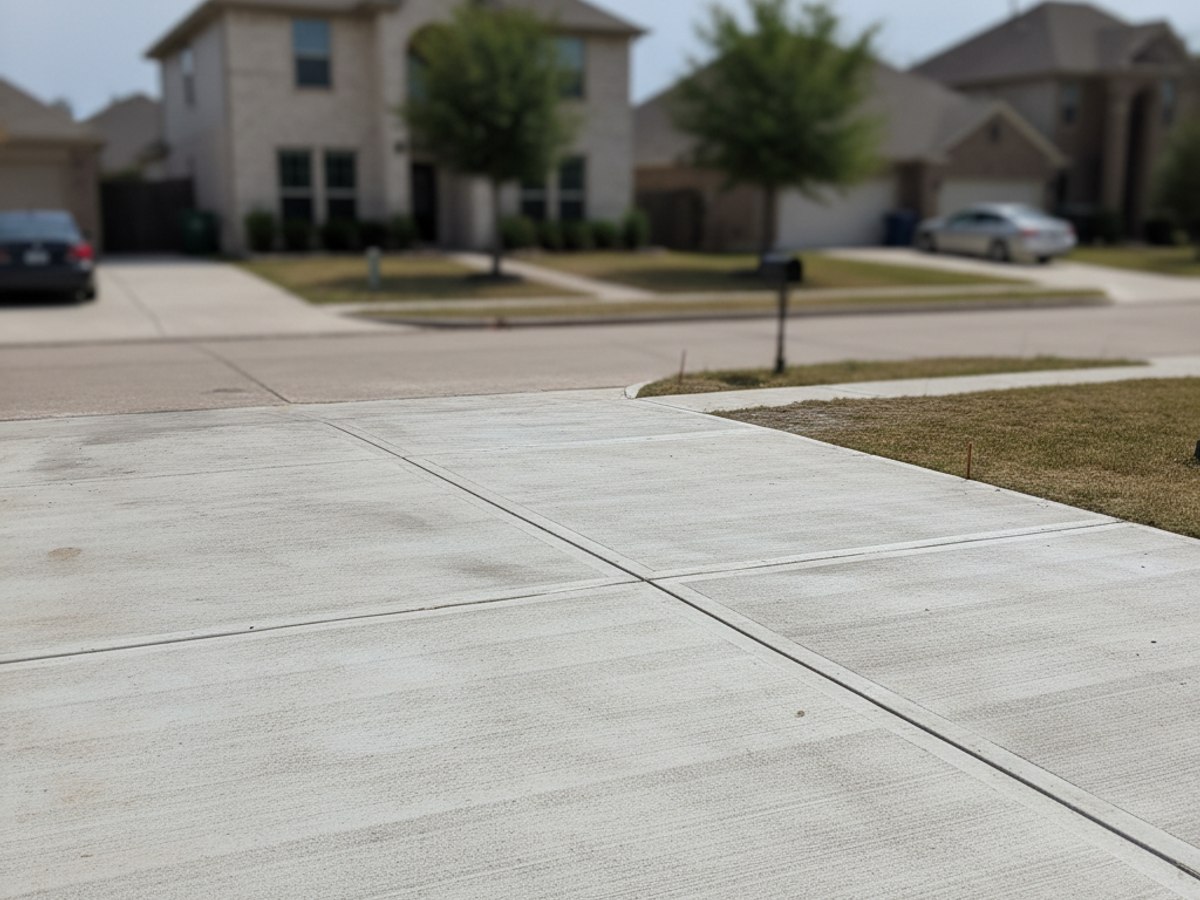
We form and pour driveways with rebar reinforcement and a compacted base, so the slab holds up under a truck and doesn't heave with the clay underneath it. We can finish it broom, exposed aggregate or stamped, depending on what you want to look at every day.

Concrete Patios

A patio slab gets poured and floated for how you'll actually use the space, a smooth broom finish for furniture or a textured one if it'll get wet and someone's walking on it barefoot. We slope it away from the house so water doesn't sit against your foundation.

Stamped Concrete

Stamped concrete gets you the look of flagstone, brick or cut stone without the joints where weeds and ants get in. We seal it after it cures, which is also what keeps the color from fading out in a couple summers.

Concrete Repair

Cracked slabs, sunken sections and spalling surfaces get fixed without always tearing the whole pour out. Sometimes that means mud-jacking a sunken corner back level, sometimes it means cutting out a section and re-pouring it to match.

Concrete Sidewalks

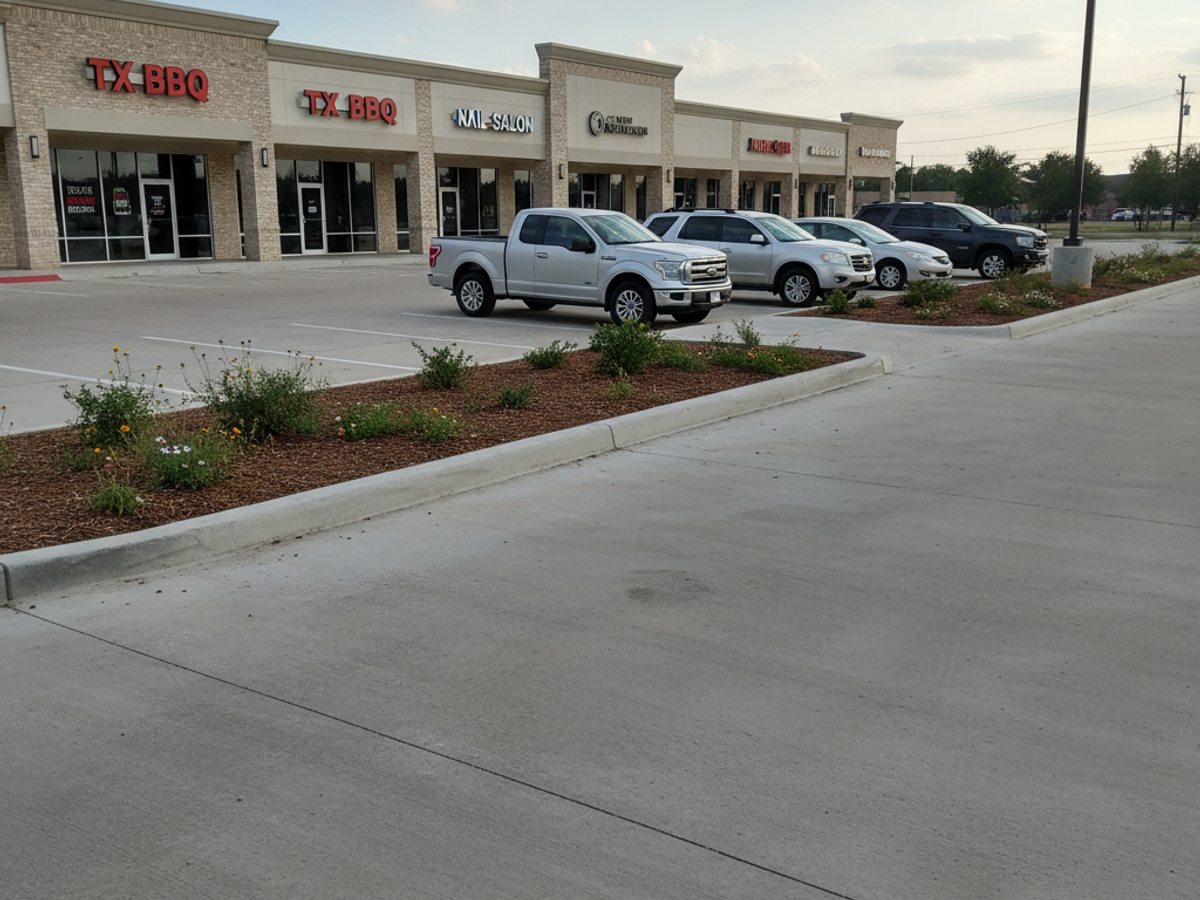
Sidewalks get poured level, sloped to drain and jointed at the right spacing so they don't crack across the middle of a panel. Most cities have a spec for width and thickness if the walk runs along the street, and we build to it.

Foundation Slabs

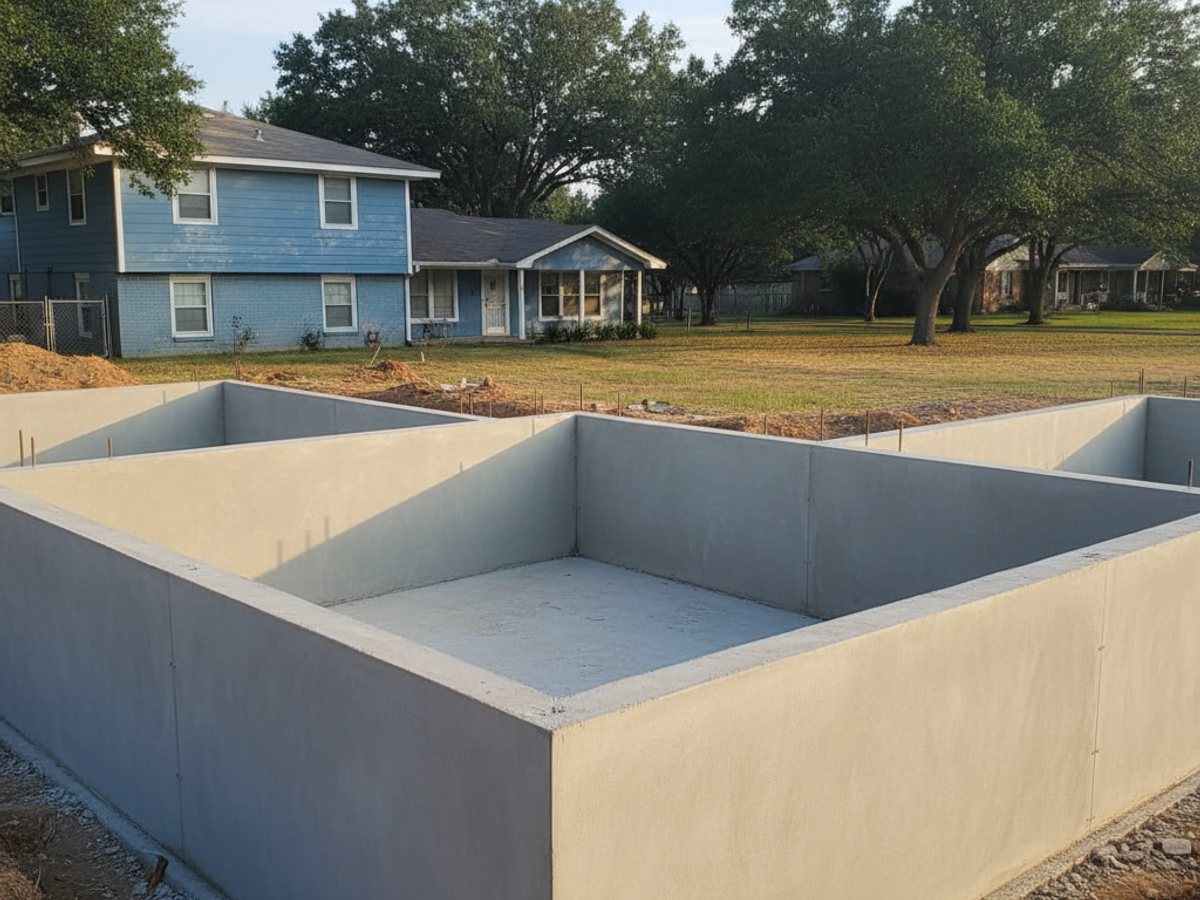
We pour slab foundations flat and square for new construction and additions, with the vapor barrier and reinforcement the framers and inspector will expect to see. Getting the grade right before the pour matters more here than almost any other job we do.

Concrete Steps & Porches

Steps and porch slabs get poured with the right rise and run so they're safe to use, and tied into the house structurally where they need to be. We match the finish to whatever's already on the driveway or patio so it doesn't look bolted on.

Garage Floor Slabs

Garage slabs get a thicker pour and a broom or sealed finish, depending on whether you're parking a car or setting up a workshop. We grade it to drain toward the door so water doesn't sit in the corners.

Retaining Walls

Retaining walls hold back sloped yards and keep soil off a foundation, and they need footings and drainage behind them or they'll lean within a few years. We build them to actually move water, not just hold dirt in place.

Concrete Removal & Demolition

Old driveways, patios and slabs get broken out and hauled off before we pour anything new. We check what's underneath first, because sometimes the reason the old slab failed is still there waiting to cause the same problem again.

How It Works

Four steps, and no surprises in any of them.

01

We come and look

You tell us what you want doing, we look at what is actually there, and we ask the awkward questions early.

02

You get a price

In writing, itemised, free. If something might add cost later we flag it now rather than at the end.

03

We do the work

Same crew throughout. We cover your floors, keep the dust down and tidy up before we leave each day.

04

We walk it with you

You point out anything you are not happy with and we fix it before the invoice, not after.

Where We Work

All of this, across McKinney, TX

This is the general range for site visits and pours.

McKinney, TX
Plano, TX
Garland, TX
Frisco, TX
Denton, TX
Carrollton, TX
Richardson, TX
Allen, TX
Wylie, TX
Little Elm, TX
Prosper, TX
Common Questions

Things worth asking

Questions that come up once a project's underway.

Do I need a permit for a new driveway or patio?
Many cities in Collin County require a permit for a new driveway, patio or slab, especially if it affects drainage or sits near a property line. Pulling the permit and scheduling the inspection is typically handled as part of the job.
How long does a typical concrete pour take?
The actual pour and finish for a driveway or patio usually happens in a single day, though forming and base prep the day before adds to the total timeline. Curing takes longer, expect at least 24 to 48 hours before foot traffic and around 7 days minimum before parking a vehicle on it.
Can you work within a specific budget?
A project can often be scoped to fit a budget by adjusting square footage, finish type or reinforcement, though cutting corners on base prep or slab thickness isn't a good way to save money. Reducing the size of the job holds up better than reducing what's underneath it.
Do you guarantee your concrete work?
Workmanship is typically covered by a warranty period specified in the written quote, covering issues like improper curing or joint placement. Concrete is a natural material, and some hairline cracking within control joints is normal, not a defect.
Who will I be dealing with during the job?
The same crew that measures the site and writes the quote usually shows up to pour and finish it. One point of contact throughout the job cuts down on confusion about what was actually agreed to.
What materials do you use for driveways and patios?
Standard ready-mix concrete with a compressive strength around 3,500 to 4,000 PSI is typical for driveways and patios, with rebar reinforcement recommended over wire mesh for anything that sees vehicle weight. Sealers and stains get applied after curing for stamped or decorative finishes.
Can I still live at home while the work is being done?
Living at home during a concrete pour is normal, since the work is usually confined to the driveway, patio or yard rather than the house itself. Vehicle access might be blocked for a few days while the new slab cures.
How should I prepare the site before you arrive?
Clearing furniture, vehicles, planters and anything else off the work area ahead of time speeds up the job considerably. Sprinkler heads and buried lines in the area are worth pointing out before excavation starts.
What if you find something unexpected once the old concrete is out?
Unexpected issues like a soft or unstable base, buried debris, or an old plumbing line sometimes show up once old concrete is removed. Any extra base repair or excavation gets discussed and priced before continuing, rather than added to the bill afterward.
How do I take care of new concrete after it's poured?
New concrete should stay free of foot and vehicle traffic for the timeframes given at the walkthrough, typically a day or two for walking and about a week for parking. Sealing every few years and keeping deicing salts off the surface in winter both extend how long the finish lasts.

Not sure what you need?

Describe the problem and we will tell you what it probably is. No obligation.
Call (214) 239-9175