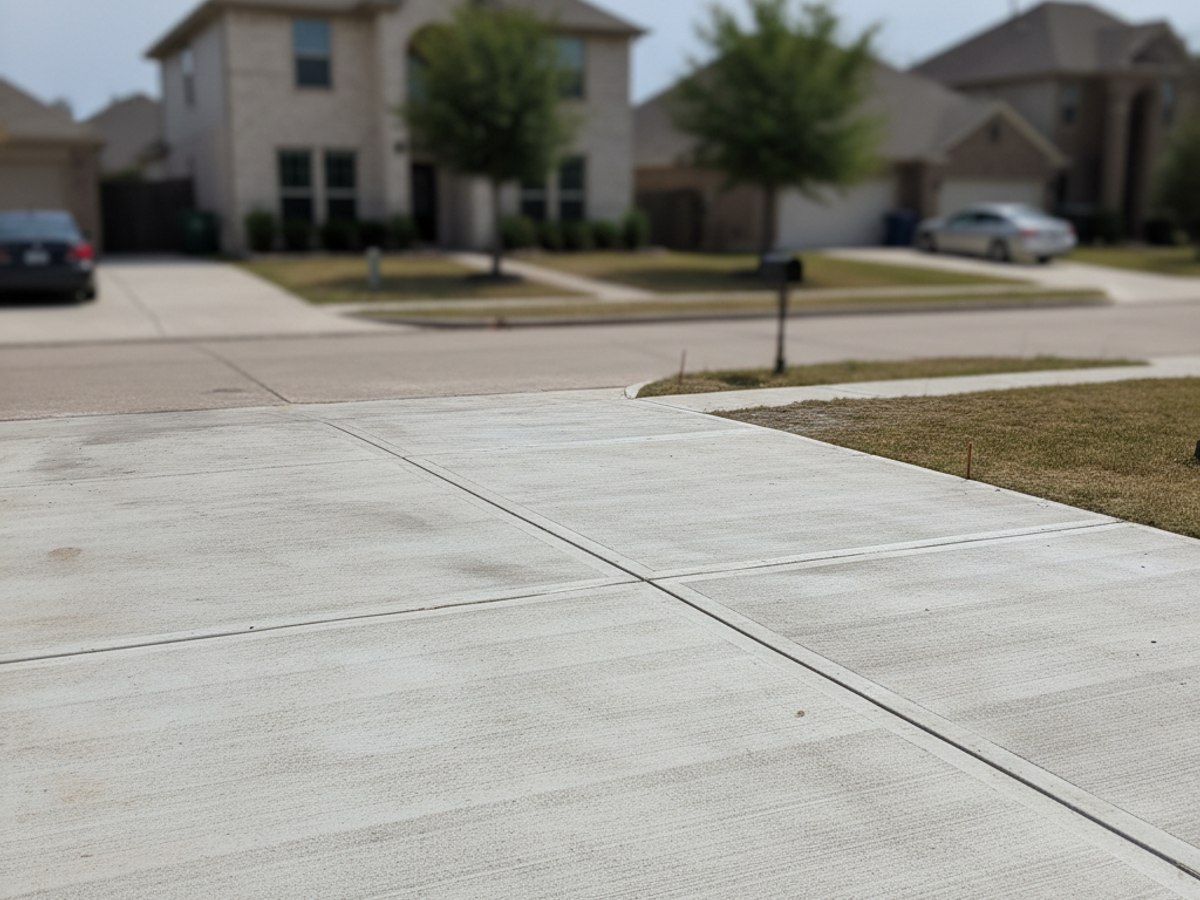
People ask us when to schedule a pour like it's a question about weather alone. It's not. It's a question about chemistry, soil, and how much babysitting a slab needs in its first week. In McKinney, all three of those point to the same answer, but the reasons are worth knowing before you pick a date.
Concrete doesn't dry. It cures, which means water and cement are reacting to form crystals that lock the mix together. That reaction needs to stay in a certain temperature band to go right. Too cold and it slows down or stops, which weakens the final strength. Too hot and it races ahead, which can cause the surface to crack before the inside has caught up. Both extremes are things we manage for, but neither is ideal, and McKinney gives us both extremes every year.
What our clay does to the schedule
This part of Collin County sits on blackland prairie clay. It's heavy, it holds water, and it moves. Soak it and it swells. Let it dry out and it shrinks and cracks, sometimes with gaps you can lay a finger into. That movement happens under your slab too, not just in the yard.
Pour a driveway or a patio base on clay that's bone dry in August and then let a wet September soak into it, and you're asking for the soil underneath to swell unevenly after the concrete's already set. Pour on clay that's saturated from spring rain and then watch it shrink back in a dry spell, and you get voids under the slab that nobody can see until something settles. Either way, the fix is the same: we want the subgrade at a consistent, moderate moisture level before we ever place concrete, and we compact it properly rather than trusting it to behave on its own.
Spring: good light, unpredictable ground
March through May gives mild air temperatures, which is good for curing. The problem is rain. North Texas spring storms can dump two or three inches in an afternoon, and a freshly poured slab that gets rained on before it sets can end up with a pitted, weak surface. We watch the forecast closely this time of year and we're not shy about pushing a pour date back a day or two if a storm cell is sitting over Collin County. Spring is workable, it just takes patience with scheduling.
Summer: fast cure, fast problems
July and August in McKinney regularly sit in the upper 90s to low 100s. Hot concrete cures fast on the surface while the interior is still catching up, and that mismatch is exactly what causes plastic shrinkage cracks, the fine spiderweb cracking you sometimes see on driveways poured in a hurry during summer. Wind makes it worse because it pulls moisture off the top even quicker.
We don't refuse summer work, but we change how we do it. Early morning pours, starting at first light instead of mid-morning. Evaporation retarders sprayed on the surface. Sometimes we adjust the mix with a water reducer so we're not fighting the heat with extra water, which weakens the final product. None of that is difficult, it's just extra steps that a lot of crews skip when they're trying to get off the job site before noon.
Fall: the window most contractors prefer
September into November is usually the best stretch. Temperatures sit in a range where the cure happens at a natural pace, humidity is lower than late summer, and the heavy storm pattern has usually broken by then. This is also when the ground has had all summer to dry out to a predictable moisture level, which makes subgrade prep more consistent. If you've got flexibility on timing and you're planning a driveway, a patio, or a slab for a shop or garage, fall is where we'd point you first.
Winter: fewer storms, more cold snaps
Winters here are mild compared to most of the country, but McKinney still gets freezes, and we occasionally get an ice event that shuts the whole area down for a few days. Concrete that freezes in its first 24 to 48 hours before it's gained enough strength can suffer permanent damage, strength loss that doesn't show up until years later when it starts spalling. If we're pouring in December or January, we're using insulated blankets and sometimes hot water in the mix to keep the slab above freezing through that early window. It can be done. It's just not the season to assume everything will go smoothly without extra care.
Permits and timing in McKinney
Most driveway, patio, and slab work in McKinney goes through the city's permitting process, and for jobs near a property line or in a platted subdivision, setbacks matter, so a quick survey check is worth doing before material even gets ordered. A lot of the newer neighborhoods around Stonebridge Ranch and Trinity Falls also have HOA design review on top of city permitting, which can add a couple of weeks if you don't start that conversation early. Older streets near downtown McKinney or in the established neighborhoods off Virginia Parkway tend to have less HOA oversight but more surprises underground, old sidewalk sections, tree roots, utility lines that weren't mapped the way they'd be today. Either way, starting the permit conversation a month or so before you want concrete on the ground will save you from a pour date that has to slide.
So when should you actually book it
If you can pick any time of year, aim for late September through November, or March through early May if you're comfortable with a weather delay now and then. Summer and winter pours aren't a mistake, they just need a crew that's doing the extra steps, not skipping them to save time. That's the kind of thing worth asking about directly when you're comparing quotes. If you want to talk through timing for your specific project, All Things Concrete Co handles driveways, patios, slabs, and repair work across McKinney and the surrounding towns, and we're happy to walk through what your soil and your schedule actually call for.